 AI


Small business financing in Saudi Arabia: loans, POS financing and founder programmes
A general guide to small business financing in Saudi Arabia by stage and size: Social Development Bank products for founders and freelancers, Kafalah guarantees, POS financing, sole-proprietorship loans, SIDF, the SME Bank and equity for startups, with fee examples and a financing-file checklist.

Key takeaways
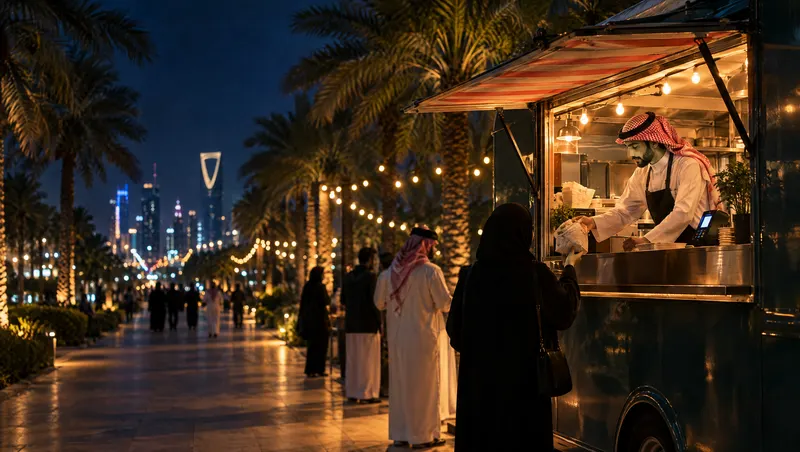
- The SDB's Entrepreneur Financing listed SAR 50,000 to 500,000 over up to 9 years, with a 9% administrative fee and a 2% annual service fee, on 14 October 2026.
- Kafalah guarantees up to 90% of a loan, capped at SAR 2.5 million for micro, 5 million for small and 15 million for medium enterprises; you apply through a lender.
- Since 2018, SAMA has allowed banks to finance small businesses against the cash flows through their mada POS terminals.
- Sole proprietorships can borrow, but lenders examine the owner's age, credit record and guarantors as closely as the business.
- Ask how each fee is calculated and put the total cost in riyals into your cash flow before you sign.
On this page
- Start with your size and stage
- Small business financing in Saudi Arabia: which option fits which stage?
- Social Development Bank: financing for entrepreneurs and small businesses
- Kafalah: a guarantee when collateral is short
- POS financing: borrowing against your card sales
- Loans for sole proprietorships: what lenders look at
- Industrial projects: SIDF
- The SME Bank and the financing gateway
- Financing for startups: when equity fits better than debt
- Your financing file: a checklist
- Your next step
Small business financing in Saudi Arabia comes through three doors: banks and finance companies, including loans repaid from card-terminal sales; government development lenders such as the Social Development Bank and SIDF, often backed by a Kafalah guarantee; and equity investment for high-growth startups. Your stage, size and collateral decide which door fits.
This is a general guide, not a ranking of lenders. Each programme is described as its official page described it on 14 October 2026; amounts, fees and conditions change, so open the product page again before you apply. Nothing here is financial advice; for your own case, speak to the lender or a licensed advisor.
Start with your size and stage
Lenders and guarantee programmes sort businesses by size, so know your category before you compare products. Monsha'at classifies enterprises by full-time employees and annual revenue, and applies the higher rating where the two differ [1]:
| Size | Full-time employees | Annual revenue |
|---|---|---|
| Micro | 1–5 | Up to SAR 3 million |
| Small | 6–49 | Above SAR 3 million, up to SAR 40 million |
| Medium | 50–249 | Above SAR 40 million, up to SAR 200 million |
Stage matters as much as size. The Social Development Bank (SDB), for example, treats a project as "new" when it is still at the idea-study stage or its commercial register is no more than six months old, and as "under establishment" or "starting operation" when the register is between six and twelve months old [2]. A business with a year or more of trading opens other products, such as Liquidity Financing, which requires a commercial register at least 12 months old [3].
Small business financing in Saudi Arabia: which option fits which stage?
| Your situation | Typical need | Options to look at |
|---|---|---|
| New venture or idea, register under 12 months | Setup costs and early operating costs | SDB Entrepreneur Financing [2]; a bank loan with a Kafalah startup guarantee [4] |
| Freelancer with a freelance document | Tools, equipment or skills | SDB Cash Financing for freelancers [5] |
| Operating micro or small business | Working capital, stock, a cash gap | SDB Liquidity Financing [3]; bank or finance-company loans, possibly with a Kafalah guarantee [6] |
| Shop, café or restaurant with card sales | Short-term cash against future sales | POS financing from a bank, based on mada terminal cash flows [7] |
| Innovative or technology project | Larger capital with a long grace period | SDB Excellence Financing [8] |
| Factory, logistics, mining or energy project | Long-term project finance | SIDF financing [9] |
| High-growth startup | Equity rather than debt | Venture capital funds backed by Saudi Venture Capital (SVC) [10] |
The sections below describe each option as its official source does.
Social Development Bank: financing for entrepreneurs and small businesses
The SDB publishes its terms on each product page. The table summarises four products relevant to founders and small businesses, as listed on 14 October 2026.
| Product | Amount | Term and grace | Fees listed | Selected conditions |
|---|---|---|---|---|
| Entrepreneur Financing [2] | SAR 50,000 to 500,000 | Up to 9 years (108 months); grace up to 12 months | Administrative fee 9%; annual service fee 2% | Saudi, aged 21–65, at least an intermediate school certificate, 100% owner, register no older than 12 months, full-time before signing, training course with a partner entity, personal interview |
| Liquidity Financing [3] | Up to SAR 500,000 | Up to 6 years (72 months), including grace of up to 3 months | Administrative fee 10%; annual service fee 3.5% | Saudi, up to 65, active register at least 12 months old, annual sales up to SAR 40 million, defaults no more than SAR 15,000 and 90 days |
| Excellence Financing [8] | SAR 500,000 to 4 million | Up to 8 years; grace up to 24 months | Administrative fee 9%; annual service fee 2% | For invention, innovation and emerging technology projects; aged 25–55, three years' experience in the field, at least 20% own contribution, collateral covering 100% of the financing, a feasibility study or business plan with official price quotes |
| Cash Financing for freelancers [5] | Up to SAR 200,000 | 40 months | Administrative fees of no more than SAR 13,000, deducted from the amount | Aged 18–60, monthly income up to SAR 35,000, a valid freelance document and a linked freelance bank account |
Entrepreneur Financing also asks for up to two guarantors, with a guarantor's net salary of at least SAR 10,000 and a salary-deduction guarantee covering 100% [2]. It is paid in two instalments, 70% and then 30% [2].
Illustrative example: reading the fees on a development loan
Illustrative example. A founder is approved for SAR 300,000 of Entrepreneur Financing. The product page lists a 9% administrative fee and a 2% annual service fee [2], but not the base each fee is calculated on.
- If the 9% applies to the full amount, the administrative fee is SAR 27,000.
- If the 2% applied to the full amount every year for nine years, service fees would total SAR 54,000.
- On that reading, fees could reach SAR 81,000 over the term; if the service fee is charged on the declining balance, the total is lower.
The point is not the exact figure but the question to ask: how is each fee calculated, is it deducted from the amount you receive, and what is the total cost in riyals over the full term? Put the answer into your cash flow before you sign.
Kafalah: a guarantee when collateral is short
Kafalah is a government programme that guarantees part of a lender's risk, so a viable small business without enough collateral can still borrow. It was established by a decision of the Minister of Finance and is managed by the Saudi Industrial Development Fund [11].
- How much it covers: up to 90% of the financing amount, with ceilings of SAR 2.5 million for micro enterprises, SAR 5 million for small and SAR 15 million for medium enterprises [4]. The percentage and amount vary by activity and region [6].
- Startups: a dedicated product covers businesses whose commercial register is no more than three years old [4].
- How you apply: you do not apply to Kafalah directly. You apply to a participating lender, either directly or through the financing gateway supervised by the SME Bank; if the lender needs extra cover, it refers your case to the programme [4].
- Fees: the programme charges a nominal annual administrative fee, paid by the lender [6].
- Documents lenders usually ask for: a valid commercial register, social insurance (GOSI) certificate, zakat certificate, Saudization certificate and VAT registration certificate, plus the owner's ID, national address, licence and financial statements, except for startups [6].
POS financing: borrowing against your card sales
Point-of-sale (POS) financing lets a business that takes card payments borrow against those sales. Since 2018, the Saudi Central Bank (SAMA) has allowed banks to finance micro, small and medium enterprises based on the value of cash flows through their mada POS terminals, for the period set in the contract [7]. SAMA also lets banks check whether a merchant already has POS-based financing with another bank before contracting [7].
Products differ by lender, so read each offer for these points:
- Total cost in riyals, including every fee, not only a percentage.
- How repayment is collected: a fixed instalment, or a share of daily card settlements.
- What happens in a slow month, and whether the term or the deduction changes.
- Early settlement and its cost.
- Whether you must move your POS terminal or your account to the lender.
Illustrative example: a café's slow month
Illustrative example. A café takes SAR 120,000 a month in card sales. Suppose an offer collects repayment as 10% of daily card settlements. In a normal month that is SAR 12,000; in a slow month of SAR 80,000 it falls to SAR 8,000, which eases cash but stretches the time to repay. Under a fixed instalment of SAR 12,000, the slow month would take 15% of card sales instead. Model both cases against your rent and salaries before choosing.
If a bank later charges a fee you did not agree to, our consumer-rights guide Dalni, an O AI product, explains how to object to a bank fee.
Loans for sole proprietorships: what lenders look at
A sole proprietorship (mu'assasa fardiya) can apply for most of the products above, but expect the lender to look closely at the owner as well as the business. The SDB's conditions, for instance, test the applicant's age, qualifications, credit record and guarantors [2][3].
Four habits make a sole proprietorship easier to finance:
- Keep the register active. The Ministry of Commerce provides an annual confirmation service for a sole proprietorship's commercial register data [12], and Liquidity Financing requires an active register [3].
- Separate business and personal money. One business account, with card sales settling into it, gives a lender a clean record.
- Keep your certificates current: GOSI, zakat, Saudization and VAT, as lenders usually request them [6].
- Protect your credit record. Liquidity Financing, for example, rejects applicants with defaults above SAR 15,000 or older than 90 days [3].
Industrial projects: SIDF
The Saudi Industrial Development Fund finances projects in industry, logistics, mining and energy. By the end of the second quarter of 2026, it had approved 5,358 loans since 1974, and 72% of its loans by number had gone to small and medium enterprises [13]. Its Project Financing product runs for up to 20 years depending on the project [9].
SIDF's application is heavier than a bank loan: a feasibility study and a financial model are mandatory, and the preliminary application asks for a guarantor with financial solvency independent of the borrower, covering at least the loan amount [14].
The SME Bank and the financing gateway
The SME Bank works mainly through other lenders [15]. On 14 October 2026 its site listed three indirect lending programmes: co-financing portfolios with commercial banks, liquidity for non-bank finance companies, and agency financing through debt crowdfunding platforms that lend directly to micro, small and medium enterprises [15]. Its financing platform links financing bodies with small and medium enterprises [15].
Financing for startups: when equity fits better than debt
A startup that expects fast growth but has little revenue often fits equity better than a loan. Saudi Venture Capital (SVC) invests through private capital funds rather than directly: it reports investments in 65 funds that have backed more than 1,000 startups and SMEs, across venture capital, private equity and venture debt [10]. For a founder, that means approaching the funds and accelerators SVC backs, not SVC itself.
Debt still has a place for startups: Kafalah's startup product [4] and the SDB's Excellence Financing for innovative projects [8] are designed for young businesses.

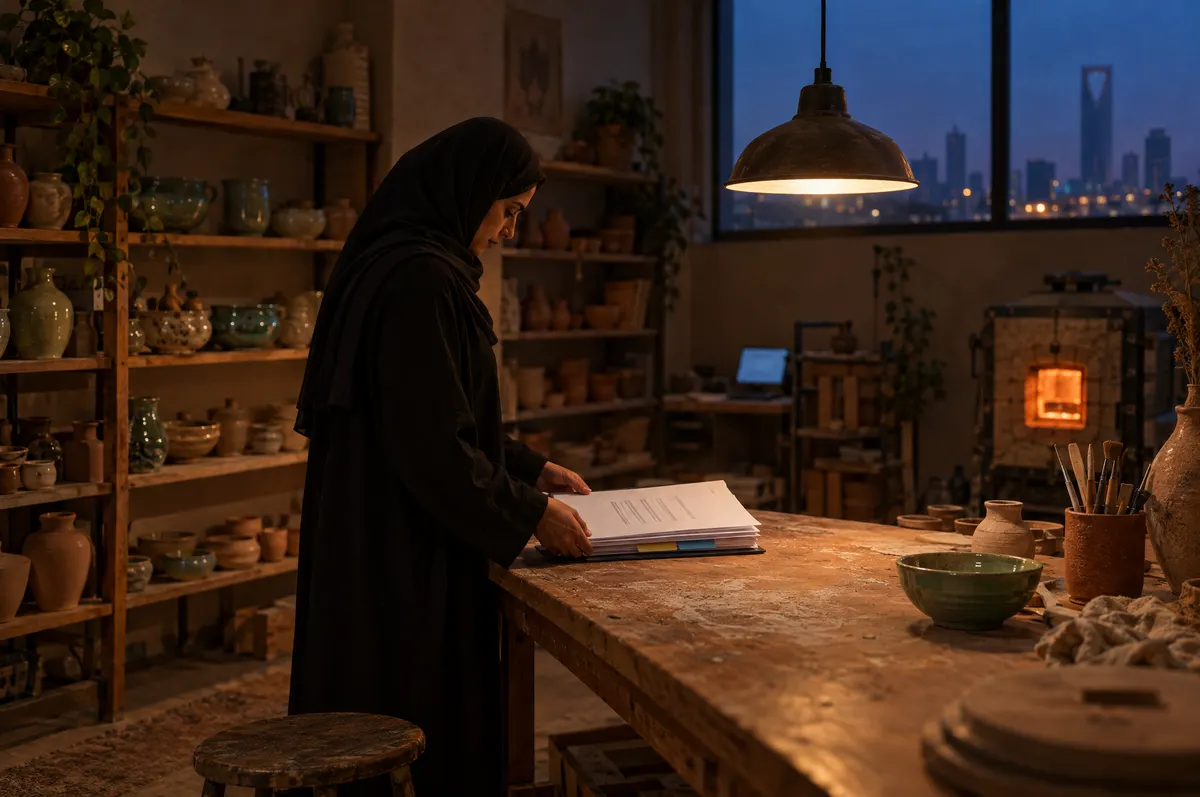
Your financing file: a checklist
Prepare these before you apply anywhere; most lenders ask for some version of the same file.
- Active commercial register and municipal or activity licence
- GOSI, zakat, Saudization and VAT certificates, where they apply [6]
- Financial statements, or recent bank and card-settlement statements
- A feasibility study or business plan with supplier quotes; mandatory at SIDF [14] and listed for SDB Excellence Financing [8]
- A cash flow forecast showing the repayment
- Owner and partner IDs, national address and guarantor details
- A one-page summary: what the money is for, how much, and how it will be repaid
Your next step
Write down your size category, your stage and the exact amount you need, with what it will buy. Then open the two or three product pages from the table above that match, read their current conditions and fees, and build the total cost in riyals into a simple cash flow before you apply for any small business financing. Once financing is in place, our guide on how AI can help a small business shows how to take one repetitive task off the team before you spend on tools. You can read about O AI, a software and AI company in Al Khobar, on our home page.
Frequently asked questions
What financing is available for a new small business in Saudi Arabia?
For a business at the idea stage or with a young commercial register, the main routes are the Social Development Bank's Entrepreneur Financing, which ranges from SAR 50,000 to SAR 500,000 for Saudi founders who meet its conditions, and bank or finance-company loans backed by Kafalah's guarantee for businesses up to three years old. Innovative projects can look at the SDB's Excellence Financing. Check each product page for current conditions before applying.
Can a sole proprietorship get a business loan?
Yes. Sole proprietorships can apply to banks, finance companies and development lenders, but lenders look closely at the owner: age, credit record, income and guarantors. Keep the commercial register active and confirmed, run all sales through one business account, keep GOSI, zakat and VAT certificates current, and avoid late payments, since some products reject applicants with recent defaults above a set amount.
What is POS financing, and how is it repaid?
POS financing is credit based on the card sales that pass through a business's point-of-sale terminals. Saudi Arabia's central bank has allowed banks to finance small businesses against their mada POS cash flows since 2018. Repayment structures differ: some lenders take a share of daily card settlements, others a fixed instalment. Ask for the total cost in riyals, what happens in a slow month and the cost of settling early.
What does Kafalah do, and can I apply to it directly?
Kafalah guarantees up to 90% of a loan to a small or medium business, so a lender can finance a viable business that lacks collateral. Ceilings depend on size, from SAR 2.5 million for micro enterprises to SAR 15 million for medium ones. You do not apply to Kafalah yourself: you apply to a participating bank or finance company, directly or through the financing gateway, and the lender refers the case.
Do I need a feasibility study to get financing?
It depends on the product. SIDF treats a feasibility study and a financial model as mandatory, and the SDB lists a feasibility study or business plan with official price quotes for its Excellence Financing. Short-term working capital products rely more on your trading record. Even when it is not required, a clear study helps you answer the lender's questions and choose an amount you can repay.
What fees do Social Development Bank products charge?
Each product page lists its own fees. On 14 October 2026, Entrepreneur Financing and Excellence Financing listed a 9% administrative fee and a 2% annual service fee, Liquidity Financing listed 10% and 3.5%, and Cash Financing for freelancers capped administrative fees at SAR 13,000. Ask how each fee is calculated and whether it is deducted from the amount, then work out the total cost in riyals.
How can a startup raise money without collateral?
There are two routes. Equity from venture capital funds and accelerators, many of them backed by Saudi Venture Capital, needs no collateral but gives investors a share of the company. Debt is possible through a lender using Kafalah's startup guarantee or through development products designed for young businesses. Compare the cost of giving up ownership with the cost and risk of repayments.
How this article was made: Researched from the sources listed below, opened on 14 October 2026. Drafted with AI assistance, then checked against those sources. General information, not professional advice. Images are AI-generated illustrations.
Sources
- Enterprises' classification (opens in a new tab)Monsha'at · monshaat.gov.sa
- Entrepreneur Financing (in Arabic) (opens in a new tab)Social Development Bank · sdb.gov.sa
- Liquidity Financing (in Arabic) (opens in a new tab)Social Development Bank · sdb.gov.sa
- Startups product (in Arabic) (opens in a new tab)Kafalah SME Financing Guarantee Program · kafalah.gov.sa
- Cash Financing for freelancers (in Arabic) (opens in a new tab)Social Development Bank · sdb.gov.sa
- Frequently asked questions (in Arabic) (opens in a new tab)Kafalah SME Financing Guarantee Program · kafalah.gov.sa
- The Finance of MSMEs Based on Cash Flows Through MADA POS Terminals (opens in a new tab)Saudi Central Bank (SAMA) Rulebook · rulebook.sama.gov.sa
- Excellence Financing (in Arabic) (opens in a new tab)Social Development Bank · sdb.gov.sa
- Project Financing (opens in a new tab)Saudi Industrial Development Fund (SIDF) · sidf.gov.sa
- Home page (opens in a new tab)Saudi Venture Capital Company (SVC) · svc.com.sa
- About the programme (in Arabic) (opens in a new tab)Kafalah SME Financing Guarantee Program · kafalah.gov.sa
- E-services catalogue (in Arabic) (opens in a new tab)Ministry of Commerce · mc.gov.sa
- SIDF in numbers, end of Q2 2026 (opens in a new tab)Saudi Industrial Development Fund (SIDF) · sidf.gov.sa
- All Requirements for Loan Application (opens in a new tab)Saudi Industrial Development Fund (SIDF) · sidf.gov.sa
- Indirect lending programmes (in Arabic) (opens in a new tab)SME Bank · smebank.gov.sa
About the author
Newsletter
New guides and news by email
New guides and news about O AI, Rushd and Dalni, at most twice a month. No spam.